
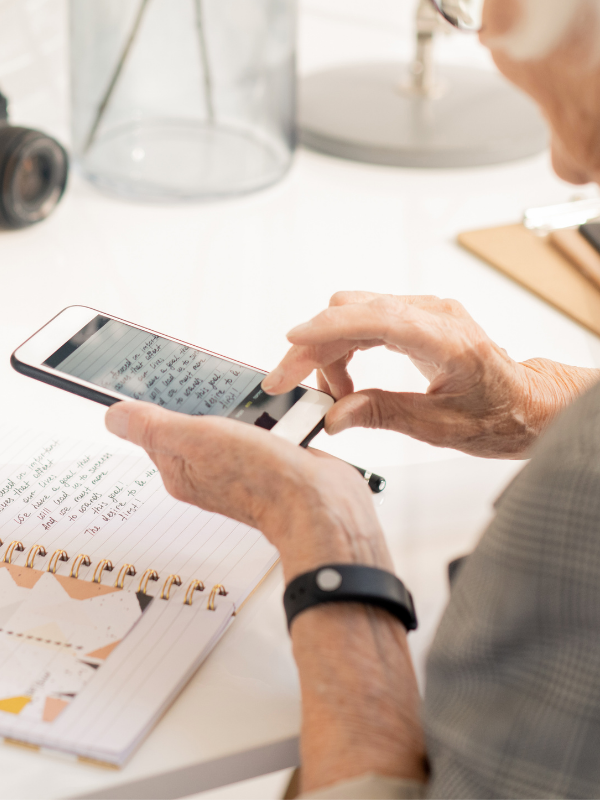

To turn old memories into a book, gather the letters, diary pages and photographs, digitize old diaries and loose documents, arrange them into a story, then print the result as a photo book.
Most families have a version of the same box. A shoebox, a drawer, a plastic container in a wardrobe somewhere. Inside: letters in faded envelopes. Photographs with handwriting on the back. A postcard from a holiday in 1974. A birthday card someone kept for reasons they can no longer remember.
These fragments are the raw material of something remarkable. The problem is that, scattered and unorganized, they rarely get seen. They sit in the dark, slowly deteriorating, waiting for someone to do something with them.
That something doesn't have to be complicated. And the result can be one of the most meaningful objects a family owns.
What goes into a memory book
A memory book, sometimes called a family archive or heritage album, is simply a collected and organized presentation of personal documents and photographs. It might focus on a single person's life, a particular decade, a family home, or a period of history your family lived through.
The ingredients are usually a mix of: diary entries and journal pages, personal letters and postcards, photographs with captions or context, handwritten recipes, newspaper clippings, travel mementos, and short written pieces that provide context for younger generations who weren't there.
You don't need all of these. You don't need to cover everything. The best memory books have a point of view and a loose sense of focus.
Starting with what you have
Before anything else, gather. Go through the boxes, the drawers, the wardrobes. Lay things out. Photograph everything with your phone as you go, so you have a digital record even before you've decided what to do with it.
YearDiary is a private digital 5 and 10 year journal for iPhone, iPad and Mac, and it shows what you wrote on the same date 1, 5 and 10 years ago. Its photo feature lets you capture handwritten pages and letters directly into the app, building a searchable digital archive as you work. This means that even before the book exists, you have something organized and preserved.
Once you have a sense of what you're working with, a shape usually emerges naturally. If someone in the family kept a diary for forty years, that alone can set the spine of the book. The story wants to be told in a particular order, around a particular person or period. Trust that instinct.
The digital version first
Before committing to a printed format, build your digital archive. Scan or photograph every document you want to include. If a lot of the material is handwritten, it helps to know how to scan handwritten journals so the text is searchable, because searchable pages are far easier to pull passages from later. Organize them chronologically or thematically. Write short captions or context notes alongside anything that needs explanation.
This step has value in itself, entirely apart from any printed book. A well-organized digital archive in iCloud means every family member can access it, it's protected against loss or deterioration, and it can be added to over time as more materials surface.
The archive you build today becomes the foundation that future generations will be grateful someone created.
Choosing how to print it
There are several excellent options for turning a digital archive into a printed book, depending on what kind of object you want to end up with.
Blurb is the choice for anyone who wants something that looks and feels like a real book. You design the layout in their software or upload a PDF, choose your paper type and cover, and receive a professionally printed hardcover or softcover book. The quality is genuinely impressive, and it works especially well for layouts that mix text, full-page photographs, and smaller document images.
Photobox is excellent for a more photograph-led album. Their lay-flat albums are beautiful for collections that are primarily visual, with captions and short text alongside images.
For something more personal and handmade, scrapbooking allows you to combine printed photographs and documents with hand-applied elements: decorative paper, tickets, fabric, pressed flowers, handwritten annotations. It takes more time but produces something genuinely one-of-a-kind.
How many copies to print
This is worth thinking about before you finalize the design. Printing five copies costs little more than printing one, and having a copy for each branch of the family is almost always something people are glad of later. The person who might not seem interested now is often the one who becomes most grateful in twenty years.
Consider printing one copy to give at a family gathering, one for each immediate family unit, and one to keep in a fireproof box alongside the original documents.
The writing that holds it together
What separates a meaningful memory book from a collection of scanned documents is the writing that provides context. Short paragraphs that explain who the people are, what was happening in the world, why a particular letter or photograph matters. These don't need to be polished or literary. They just need to be honest and informative.
If you're creating a book about a grandparent, consider interviewing family members about their memories before you write. Ask specific questions: What do you remember about how they laughed? What did their house smell like? What's a story they told that you've never forgotten? These small details are the ones that bring a portrait to life.
The box of fragments in your wardrobe is waiting. It won't organize itself, and it won't improve with time. But with a few afternoons and a little intention, it can become something that sits on shelves for generations and tells people exactly where they came from.
That's not a small thing.